ISEAA is dedicated to the multi-disciplinary investigation of Southeast Asia’s archaeological past in order to advance that knowledge for the benefit of both scholars and the public.
Explore Our Principal Research Initiatives
The Ban Chiang Project
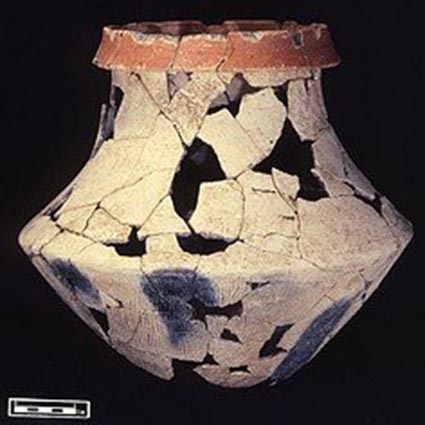
Decades of research on the UNESCO World Heritage site that reshaped understanding of early metallurgy and settlement in Southeast Asia.
ISEAA by the Numbers
# of Followers
# of references
open Databases

Join our community
Our Facebook feed is a service to the discipline — a steady stream of new publications from scholars across Southeast Asian archaeology, curated so you never miss relevant work. Join 14,000 followers who rely on it to stay current.

Page likes: 14,282

Institute for Southeast Asian Archaeology - ISEAA
(opens in a new tab)Investigating prehistory in Southeast Asia and developing archaeological resources for scholarly and

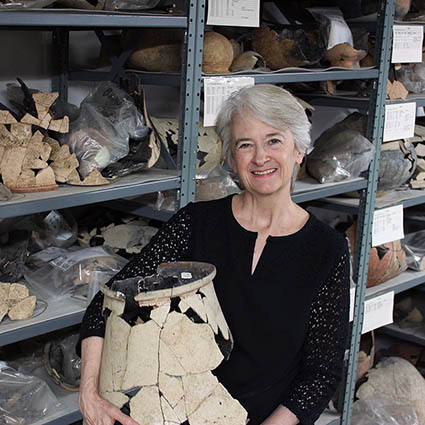
Carter and Visoth published "In Small Things Forgotten?Repatriating Small, Utilitarian Cambodian Artifacts" in the Journal of the Siam Society doi.org/10.69486/114.2.2026.4 . They note that Cambodia has become a model for the successful repatriation of archeological heritage in Southeast Asia, with hundreds of major sculptural and architectural works returned in recent years. Yet many smaller artifacts―including pottery, spindle whorls, beads, bangles, and portable metal objects―were also looted. This article examines the recent repatriation of a collection of such objects and considers their significance. Although lacking secure provenience, the collection provided opportunities for documentation and research before its return. The article argues that repatriating these utilitarian artifacts is as important as returning more celebrated museum masterpieces.
Yulianto et al. published "Paleotsunami Context and Cultural Narrative in Southern Java: An Interpretive Reassessment of Serat Sri Nata" in Geographies doi.org/10.3390/geographies6040123 . This study examines whether a sequence of environmental descriptions preserved in Serat Sri Nata may reflect cultural memory of a past coastal disturbance, possibly a tsunami, along the southern coast of Java. The narrative presents a series of motifs—ground movement, apparent shoreline change, unusual marine-animal behaviour and mortality, turbulent and “roaring” waters, and extraordinary coastal inundation—that resemble phenomena reported in modern tsunami accounts and the paleotsunami literature. Using a cross-disciplinary interpretive approach, these textual elements are considered alongside regional geological and geomorphological evidence from southern Java, including the previously reported candidate deposit at Cikembulan (Pangandaran), whose tentative age has been placed around 1600 CE. Figure shows tectonic, cultural, and archaeological settings of Java are relevant to the proposed geomythological interpretation of the Ratu Kidul tradition.
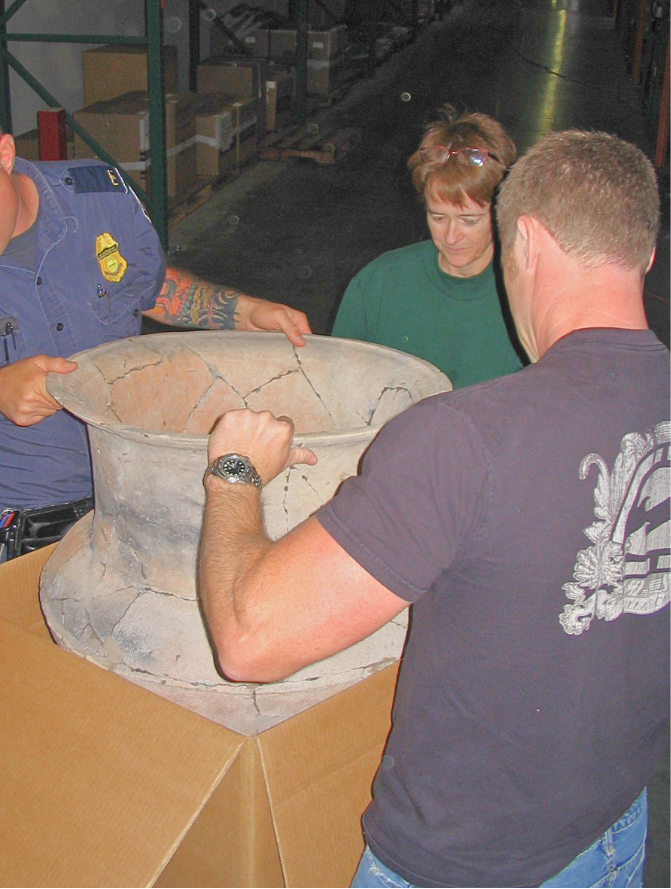
White et al. published "Quantifying Archeological Damage: The Operation Antiquity Seizures from Thailand" in the new Special Edition of the Journal of the Siam Society doi.org/10.69486/114.2.2026.3a . They discuss “Operation Antiquity” (2002–2014), a United States criminal investigation, which exposed the large-scale illicit trafficking of archeological materials from central and northeast Thailand, including Ban Chiang, and their acquisition by complicit dealers, collectors, and museums in the U.S. The investigation led to the seizure of tens of thousands of illegally imported artifacts. This article presents the methodology developed to assess the archaeological damage caused by this trafficking as required for legal proceedings under the U.S. justice system. The assessment demonstrates the extensive destruction of Thailand’s archeological record resulting from systematic looting and illustrates how damage assessment supports the protection of cultural resources and the prosecution of crimes against archaeological heritage. Online appendices so06.tci-thaijo.org/index.php/pub_jss/article/view/301717/197730 provide detailed data that support the methodology and conclusions.
Reminder, this talk is tomorrow morning and is FREE for undergraduates!!Lecture at The Siam Society this November!.Pioneering Archaeology in Laos: The Middle Mekong Archaeological Project.A Talk by Joyce White.To view the full announcement, please visit bit.ly/46YcDnf.📅Saturday, 14 November 2026 at 10.00 - 12.00📍Lecture Room, 4/Floor, The Siam Society.🎟️Admission:Members and Students (up to undergraduate level) - Free of chargeNon-Members - THB 300.👉 To book:Tel: 02 661 6470-3 ext 201 or e-mail: lectures@thesiamsociety.org.#TheSiamSocietyLecture #laos #archaeology #laoheritage #mekong
Last night's talk on Operation Antiquity www.facebook.com/groups/1693055870976440/posts/4592139401068058
This content isn't available right now
When this happens, it's usually because the owner only shared it with a small group of people, changed who can see it or it's been deleted.
Support the future of Southeast Asian archaeology
Your gift sustains fieldwork, open-access research, and the next generation of scholars documenting the region’s deep past.
Collaborating institutions for ISEAA, MMAP, and the Ban Chiang Project have included, among others:
- Penn Museum
- Mahidol University
- Department of Heritage and Fine Arts, Laos
- University of Otago
- Udon Thani City Museum
- University of Hawaii
- Fine Arts Department of Thailand
- Queen Sirikit Botanic Garden
- University of California Irvine
- University College Dublin
- William Patterson University
- University College London
- Academy of Natural Sciences
FUNDERS & SUPPORTERS HAVE INCLUDED:
- The Henry Luce Foundation
- Penn Museum
- University of Pennsylvania
- National Geographic Society
- National Science Foundation
- Friends of Ban Chiang
- Donors to ISEAA
- American Philosophical Society
- Royal Thai Embassy, Washington DC
- University College Dublin
- Mahidol University